Academic Pedigree
PhD in Bioinformatics Magna cum laude
University of Bonn (Germany) | 2010 – 2013
MS in Life Science Informatics Gut (A)
Bonn-Aachen International Center for IT & Fraunhofer SCAI | 2007 – 2009
Bachelor of Engineering First Class with Distinction
Acharya Institute of Technology (India) | 2002 – 2006
Selected Scholarly Record
Featured System & Software Demos
Interactive walk-throughs showcasing custom graphical interfaces, computational architecture runs, and predictive systems biology simulations.
Systems Biology Framework Simulation
Demonstrating multi-modal network inference capabilities, predictive logic execution, and interactive interface controls for high-dimensional biological data.
Algorithmic & Pipeline Architecture Run
An inside look at pipeline execution parameters, showing automated workflow tracking, graph rendering, and data parsing loops.
Technical Perspectives
Micro-essays and quick architectural takes on the evolving intersection of machine learning, computational genomics, and drug discovery workflows.
Multi-Agent Orchestration in Target Identification
Single large language models fail when parsing highly dense, multi-omic academic literature due to context dilution and hallucinated pathways. Transitioning to specialized, multi-agent frameworks—where independent agents are isolated to cross-examine target validity, patent spaces, and telemetry data—is yielding drastically cleaner candidate signals.
The Longevity of Boosting on Tabular Biological Data
Despite the massive industry shift toward deep transformer architectures, gradient boosting variants remain the undisputed backbone for sparse, high-dimensional tabular biological matrices. When sample sizes are outpaced by feature counts (e.g., patient transcriptomics), the inductive bias of tree-based partitioning consistently dominates over parameter-heavy neural networks.
Talks, Keynotes & Snippets
Highlights, technical keynotes, community engagement, and creative publications from over 15+ international events and personal archives.
"The barrier to scaling multiomic architectures isn't the compute footprint—it's establishing reproducible spatial telemetry patterns that bridge raw imaging pixels with downstream agentic systems."
Industry Symposium: AI in Life Sciences
Featured domain expert speaker at the international Fraunhofer Institute for Algorithms and Scientific Computing (SCAI) symposium, detailing industrial applications, computational biology architectures, and the evolution of AI frameworks within the life sciences ecosystem.
The Structural Over-Use of the P-Value in Modern Analytics
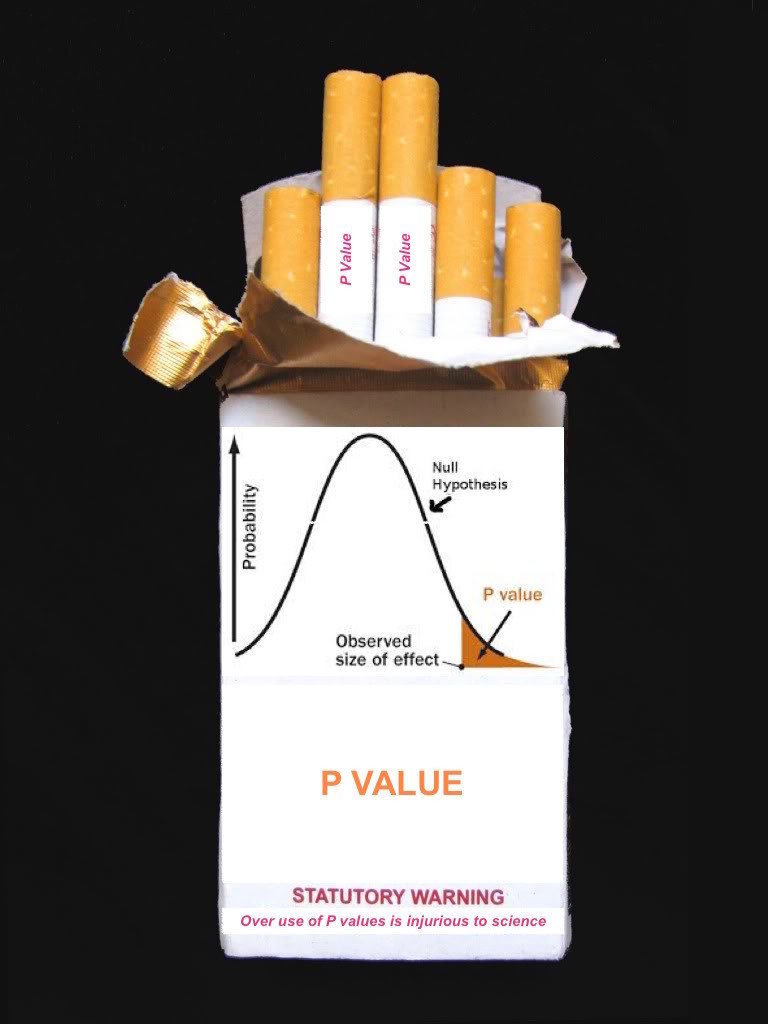
An architectural critique on data science methodology exploring the systemic dependency on statistical significance limits. Outlining why scaling robust production AI patterns requires moving beyond arbitrary cutoff metrics to holistic decision-making workflows.
Pascal Sempé (@IBM) and Paurush Praveen (@CluePoints) two of our speakers for the afternoon sessions over "Potentialities of artificial intelligence use in drug discovery" and "Potentialities of artificial intelligence use in drug development: clinical research" #AI #wallonia pic.twitter.com/n4XfnQc4vu
— BioWin (@BioWin_asbl) November 28, 2017
DREAM Challenges Top-10 & NeurIPS Symposia
Demonstrated elite algorithmic performance by ranking in the Top 10 across two separate DREAM Challenges, solving complex, crowd-sourced biomedical data science problems. Regularly engage with premier global AI communities, including attending NeurIPS, to cross-examine emerging neural architectures and benchmark industrial R&D pipelines against state-of-the-art breakthroughs.
Boosting statistical network inference by incorporating prior knowledge from multiple sources
A recorded technical presentation delivering deep architectural insights into heterogeneous biological knowledge integration from multiple sources in Bayesian framework.
The Forgotten Race: Return of the Hare
An imaginative piece featured on my personal blog site. Writing narratives, creative essays, and speculative fiction acts as a crucial conceptual tool for stretching communication architectures beyond dry documentation into deep, resonant human storytelling layouts.
Research Highlights & Core Focus
A timeline tracking over a decade of algorithmic and computational contributions across biomedical domains.
Spatial AI & Biomedical Generative Frameworks
Leading engineering pipelines focused on deep learning computer vision architectures and generative intelligence models purpose-built for the next generation of therapeutics and digital pathology.
Microscopy Spatial Data AI
Developing models optimized for high-throughput automated cellular segmentation, tissue region identification, and spatial single-cell mapping loops.
Flow Cytometry Systems
Architecting rapid, automated gating algorithms and statistical frameworks for multi-parametric single-cell identification.
Biomedical LLM Adaptations
Fine-tuning and prompting foundational Large Language Models to read, synthesize, and extract knowledge from unstructured clinical text and molecular corpuses.
Clinical Trial Data Integrity
2015 - 2018Engineered unsupervised statistical anomaly detection algorithms designed to systematically identify, audit, and isolate processing biases and data artifacts across distributed, multi-center clinical trials.
Statistical Microbiome Ecology
2013 - 2015Formulated high-dimensional statistical network frameworks to model, map, and evaluate complex structural composition and ecological dynamics within the human intestinal microbiome.
Multimodal Neurodegeneration Modeling
2013 - 2015Constructed predictive disease-progression models by integrating multimodal inputs—unifying pixel-level radiological mapping (MRI/CT scans) with macro-level pathological tissue structures.
Bayesian Network Inference (NEM)
2010 - 2013Developed a custom Bayesian Framework utilizing Nested Effects Models (NEM) to reconstruct and infer biological signaling network topologies from high-throughput transcriptomic perturbation data integrated with time-lapse video tracking loops.